
At a glance
- Page topic
- How to prepare for rodent control
- Area covered
- Riga and the surrounding region
- Price
- From €40 — the figure quoted is the final price
- Availability
- 24/7, weekends and nights included
- What works
- Metal mesh with a 5 mm aperture and cement mortar; expanding foam does not
- How to book
- Enquiry form only — we reply within 5 minutes
Unlike some other treatments, rodent control does not require clearing the rooms or moving out.
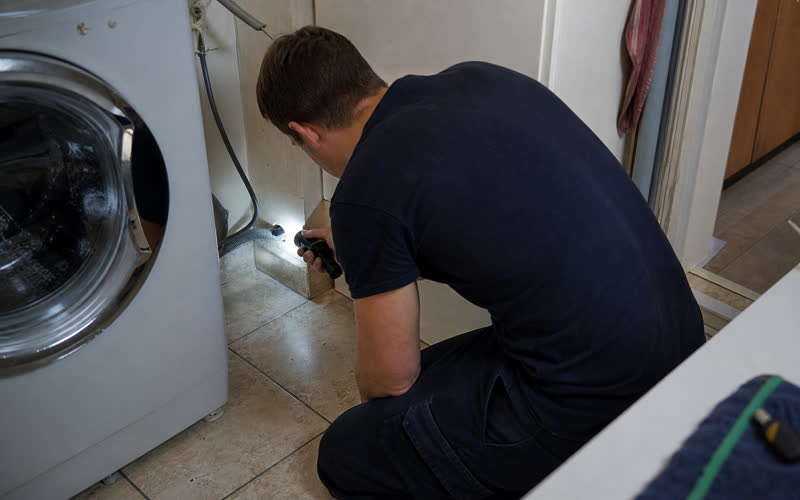
Provide access
Clear access to the places where activity has been noticed: the backs of kitchen cupboards, the space under the sink, basement corners, the loft hatch. If we cannot get there, neither can a station.
Put food away
Food left out, pet food and waste should be moved into closed containers. This matters for more than hygiene: if there is easier food in the room, a rodent will choose that instead of the bait.
Prepare your information
Note where droppings have been seen, where noise has been heard and at what time of day. This information directly affects where we place the stations — and therefore the result too.
Pets
During the treatment it is best to keep pets in another room. Afterwards they can move about freely — the stations are tamper-resistant and fixed in place.
A short list for the day before
Preparation takes about half an hour if you do it the evening before the specialist arrives. Walk through the rooms and write down exactly where noises have been heard, where droppings have been found and where food has gone missing — this list is the most valuable thing you can prepare. Clear access to the space under fitted kitchen units, the cupboard under the sink, the back of the fridge and the gaps at the sides of the cooker; these are points that are almost always examined. Find the keys to the basement, loft and plant rooms and check that they actually fit. Make sure the lights work in rooms with no window. If there are small children in the home, plan where they will be during the treatment. Finally, agree which member of the household will stay in and open the door if you are going out.
What not to do before the treatment
Some preparation mistakes come from good intentions. Do not do a deep clean in the very area where rodents have been seen — by wiping away tracks, droppings and grease marks you destroy the only clues used to work out the runs and where the nest is. Do not seal up the gaps and holes you find before the treatment: a closed route to the outside means the animals look for a new direction, and that usually leads deeper into the building. Do not push furniture tight against the wall after cleaning — a gap is needed between the back of a cupboard and the wall so the skirting can be examined. Do not use strong scents, chlorine-based cleaners or essential oil diffusers immediately before the visit. And do not put out any products yourselves a few days beforehand — it changes the animals' behaviour and makes the assessment harder.
The basement and the storage cage
Basements in Riga buildings are the most frequently treated space and at the same time the most often poorly prepared. Find out in advance who holds the key to the communal basement, the heating substation and the lower stairwell doors — if the key can only be got from the building manager's office during working hours, sort that out beforehand. Check the lighting: a blown bulb in a basement corridor is a typical reason why an inspection ends up being done by torchlight and takes twice as long. Clear a strip at least thirty centimetres wide along the walls so it is possible to walk along the line where the floor meets the wall. Move or take out cardboard boxes and old textiles. If potatoes, onions or animal feed are kept in the cage, prepare somewhere to transfer them into a closed container.
Preparing commercial premises
At a business, preparation is organisational as well as physical. Set the treatment time outside customer hours — most often that is the evening after closing or early morning. Prepare a plan of the premises in advance, or at least a list: stockroom, waste room, service corridor, basement level, roof plant room. Nominate one member of staff to accompany the specialist and open every locked room, including those nobody normally goes into. Move stock and packaging materials off the floor onto shelves, and clear access to the bottom shelves and the space behind refrigeration units. Take out or empty the bins the day before. If the premises run several shifts, tell all of them, not only the one that will be there.
How to brief the household or the staff
Preparation ends with everyone who uses the space knowing three things: where the points have been placed, that they are not to be touched, and that any observation should be reported. In practice a short message in the group chat or a note on the fridge is enough. Explain it to children simply — this box is grown-ups' work, it is not to be touched. In a household where someone else does the cleaning, warn them not to move the points or knock them over while cleaning the floor. At a business, put the same thing into the shift instructions and tell the cleaners and delivery staff as well. Ask people to write down the date and place of every observation — noise at night, fresh droppings, gnawed packaging. At the follow-up check these notes are more accurate than memory and make it quick to see whether the movement has stopped.
Frequently asked questions
Do I have to move out?
No.
Do surfaces need washing after the treatment?
No.
How long do I need to be there?
Only during the inspection and placement — usually up to a couple of hours.
Does food need taking out of the kitchen cupboards before the treatment?
There is no need to take everything out. It is enough to move food left in the open, bread, fruit and opened packets into closed containers or the fridge. What matters more is clearing access to the bottom and back of the cupboards, because that is where the runs to be examined are.
What if it is not possible to clear access to every area?
When you fill in the form, say which areas are blocked or unavailable. Often the answer is simply to change the order of the inspection or agree a different time. The worst option is to say nothing — the treatment is then incomplete and the result short-lived.
Do I need to put anything out or buy anything before the specialist arrives?
No. Products put out in advance change rodent behaviour and make the inspection less accurate. The only useful thing to prepare is information: dates, places, photographs and access keys. The specialist brings everything else.