
At a glance
- Topic
- Mice in autumn — why they move indoors
- Signs
- Droppings, grease marks, gnawing, noise
- Mouse gap
- From 6–7 mm
- Rat gap
- From 20 mm
- What fixes it
- Inspection, bait stations or traps, sealing entry points
- How to book
- Enquiry form only — we reply within 5 minutes
Autumn migration is not an accident. Once night temperatures drop below roughly 10 degrees and food in the fields runs out, rodents look for warmth and food — and the nearest building is the logical target.
Why autumn in particular
Three reasons coincide: falling temperatures, the end of the natural food supply, and the young generation raised over the summer looking for territory of its own. That is why the number of enquiries in September is several times higher than in summer.
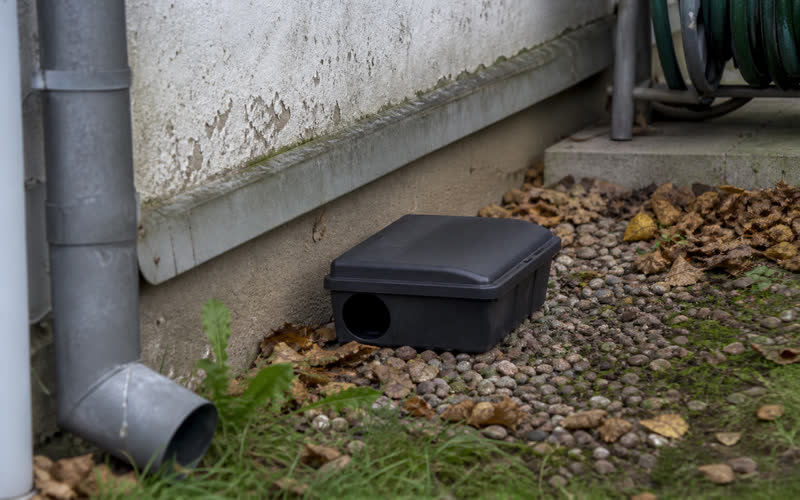
Where they get in first
The basement, the garage, the shed and the loft — rooms that are warm, quiet and rarely visited. Only after that do rodents move into the living areas.
What to do before the cold sets in
Seal the gaps around pipework and ventilation grilles with metal mesh, clear food out of the garage and shed, close the compost heap and check the foundations for gaps. Done in August, these steps cost considerably less than a treatment in November.
Prevention costs less than treatment
A preventive treatment before the season stops the problem while it has not yet begun. Once rodents are already nesting in the structure, the scale of the work is different.
The autumn calendar month by month: August, September, October, November
The rodent autumn in Latvia does not start with the first frost but much earlier. In August the young born over the summer become independent and start looking for territory of their own — this is the dispersal period, when one nest turns into eight or ten animals spreading through the neighbourhood. September is the real peak: nights turn cold, the fields are harvested, and the search for shelter happens on a mass scale. September is precisely when we receive the most enquiries from private houses. In October the animals are already inside and start breeding in the warm rooms — this is the month when people first hear scratching in the ceiling or find droppings in a cupboard. By November the population is no longer new; it has settled in, built nests and laid in stores. The practical sequence is simple: seal up in August, watch in September, react in October, and by November you are paying for a full treatment.
The ten-degree threshold — what actually triggers the move
Mice do not follow the calendar, they follow the night temperature. The critical threshold is around ten degrees at night: once the temperature drops below it several nights running, seeking warmth becomes everyday behaviour rather than chance. Around Riga this usually happens in the first or second third of September, and a week later on the coast than inland. What matters is what happens at the same time. The grain harvest ends, and along the field margins both cover and food disappear overnight. The grass is cut, the potatoes lifted, the beds cleared — the animals are left exposed to predators. Meanwhile your house radiates heat, and around the foundations, along the plinth and by the basement windows the temperature is three to five degrees higher than the surroundings. It is this band of warmth that draws rodents in first — not the food in the kitchen.
Which buildings suffer first, and why those ones
Autumn arrivals are not evenly spread. The first to suffer are buildings with a low, cool, rarely visited lower floor. Private houses with a ventilated crawl space or an unheated basement are in the front row, because they offer warmth, quiet and access from ground level all at once. Next come garages and sheds — bird food, vegetables, seeds and textiles are often stored there, and the doors are thrown wide open several times a day. Summer houses and garden cabins suffer most because they stand empty over the autumn; a rodent gains months of undisturbed space. In apartment blocks the clear risk group is the ground floor and the flats above the basement, especially those with heating substation or sewer services running under the floor. On the fifth floor the autumn migration is usually not felt at all — problems there have a different origin and develop more slowly.
A field mouse is not a house mouse: how the behaviour differs
It is not only house mice that come into buildings in autumn. Very often they are field and woodland rodents — animals with a pale belly, larger ears and a markedly longer tail. Their behaviour differs in several practical ways. They are far more mobile and inclined to jump, so they travel not only along the edges of walls but across open stretches of floor and vertically through insulation and cabling. They are less tied to human food and go looking for seeds, nuts, grain and garden produce — which is why the first signs are often found not in the kitchen but in the pantry, the garage or the potato box. They tend to build up stores, and a typical find is a little pile of seeds or dry pet food in a boot, in the insulation or in the corner of a drawer. And they do not stay in the building all year — they come in for the season, which means that closing off entry points here has a disproportionately large effect.
A pre-autumn checklist for a Latvian house
A rodent does not choose a building that is closed up. Walk round the house with a torch and look low down. First — cracks in the plinth and foundations, ventilation grilles with no mesh, openings wider than six millimetres; fine stainless mesh or metal grille together with mortar is the answer, expanding foam on its own is not. Second — the points where water, sewer, electricity and air-source heat pump pipes enter the wall; there is almost always a gap left there. Third — the bottom edge of the front door and the garage door; a threshold seal that does not close the gap is an entrance. Fourth — the immediate surroundings: a woodpile against the wall, the compost heap, an overgrown belt of shrubs and the last grass cut of the year, because long grass against the plinth is a staging post. Fifth — food storage: seeds, bird food and pet food in metal or thick glass containers, not paper sacks. Do this round in August, not October.
What people get wrong: sudden invasion or seasonal arrival
The typical reason for a call in October goes like this: everything was fine, and then in one week mice appeared. In practice a sudden invasion is rare. What has happened is a seasonal arrival that began several weeks earlier and simply went unnoticed. The first signs are quiet ones — a few dark droppings under the sink or in the corner of a cupboard, faint scratching sounds at night, a gnawed edge on a bar of soap, shredded insulation or paper somewhere in a recess. People notice them only once the population has grown enough that the animals start moving about in daylight and coming out into the kitchen. The other common mistake is assuming that a clean house is protected. In the autumn migration the decisive factors are warmth and access, not crumbs on the table — meticulously kept houses suffer just as often if there is a two-centimetre gap in the plinth.
Why acting in August costs several times less
The difference between August and November is not just a matter of the calendar. In August you are working on the outside of the building: a couple of openings, mesh, a seal and tidier storage. There is not a single animal inside yet, so there are no nests, no breeding, no contaminated surfaces. By November that same house is supporting a population that started breeding in October — one female produces several litters a year, and each offspring becomes reproductive after a month and a half to two months. That is why November work involves placing control points, repeat visits and monitoring, and only then sealing the entry points, because it must not be done sooner. Our prices are final: minimum callout from €40, flats €40–80, a private house €90–110, commercial premises from €70. If you are not sure which stage you are at, fill in the form and describe the signs — we reply within 5 minutes, and we work around the clock in Riga.
Frequently asked questions
When does the autumn migration start?
Usually at the end of August or in September, depending on the temperature.
Does prevention really help?
Yes — sealing entry points before the season is the single most effective step.
Does the problem end in winter?
No. Indoors, rodents stay active all winter.
Why have mice appeared when there was nothing last autumn?
Every autumn is different. What changes things is the food available in the fields, how successful the summer breeding was, building work on neighbouring properties, and even when the surrounding grass was last cut. If a shed nearby has been demolished or another building closed up, its occupants look for new shelter in the nearest warm place. The house has not changed — the pressure from outside has.
Do mice come in only at night in autumn?
They come in mainly at night and at dusk, when the animals are most active and least visible. On cold, wet September mornings, though, movement often happens in daylight too, especially in garages and basements. If you see a rodent during the day in a living room, that is usually not an arrival but a sign that the population is already large and space is running short.
How long after sealing up can you be sure the autumn migration will not get in?
Sealed openings work for as long as they stay sealed. In practice you should check them twice a year — in spring after the frosts and at the end of August before the season. Mortar crumbles out of cracks, seals wear, new pipes get run in during building work. Five minutes with a torch along the plinth is the cheapest autumn job there is.
Does a summer house need treating if nobody lives there over the winter?
It needs it precisely because nobody lives there. An empty, undisturbed building with textiles, seeds and soft furniture is an ideal place to overwinter, and in spring you come back to ruined insulation, gnawed mattresses and contaminated surfaces. Before closing it up, take out the food and seeds, seal the entry points and leave control points inside that you check on every visit.