
At a glance
- Service
- Rodent control in schools and nurseries
- Area covered
- Riga and the surrounding region
- Price
- From €40 — the figure quoted is the final price
- Availability
- 24/7, weekends and nights included
- Reply time
- Within 5 minutes of the form being submitted
- How to book
- Through the enquiry form only
In an educational setting safety is the first criterion, and effectiveness only after that. That is why we use no bait in rooms where children are present.
Bait-free methods
In rooms where children are present we use only mechanical traps and monitoring points. Bait stations go in service rooms and around the perimeter only, lockable and fixed down.
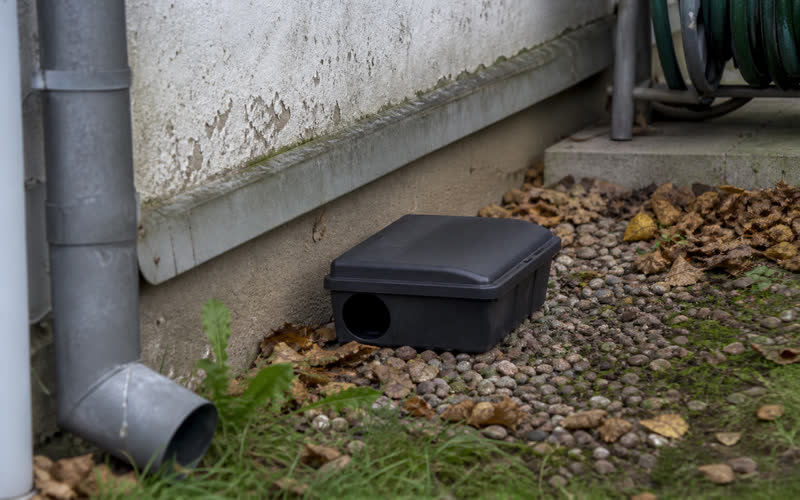
The canteen and the food store
The canteen and the food storage rooms are the main source. That is where we place control points more densely.
Working during holidays
We plan the treatment for weekends or school holidays, when there are no children in the building.
Food in classrooms, lockers and desk drawers
The canteen is the obvious place, but in a school the real flow of food is often kept going by the classrooms. A forgotten sandwich in a bag, a half-drunk juice in a locker before the holidays, a packet of biscuits in a desk drawer, sweet wrappers at the bottom of a cloakroom cupboard — every one of these small things is a permanent feeding place that operates for weeks. In a nursery you can add food in the cupboards of the group rooms and the remains of birthday treats. The practical solution is not prohibitions but routine: food kept only in closed, hard containers in a designated place, lockers completely emptied and wiped out once a month, and a joint check before every holiday in which the children take everything out of their desks and lockers. That single procedure before the longer holidays prevents more problems than any extra point in the corridor.
Service rooms and the basement — where the rodents actually live
A rodent does not nest in a classroom — there is noise, light and people. The nests are in the heating substation, the ventilation plant room, the basement pipe corridors, under the stage in the assembly hall, in the sports hall equipment store and behind the electrical distribution cabinets. In the older Riga school buildings with extensive basements and Soviet-era heating runs this network is broad and connected to the outside through the pipe entries. It is in these rooms that we place the main network of points — there are no children there, the temperature is stable and the real runs are there. In classrooms, corridors and the dining hall only monitoring and structural work remain. A structure like this is both safer and more effective: the population is reduced where it lives, and nothing that should not be there is present in the children's areas.
What the site team should check each week
A regular self-check costs ten minutes a week and considerably shortens the time it takes to detect a problem. The list is specific: the basement and heating substation floor along the walls — any fresh droppings or shavings; the undersides of the canteen store shelving and the corners of the dry goods sacks; the ventilation grilles and pipe entries in the basement — any new hole or dislodged seal; the thresholds of the external and emergency exit doors — is the gap under the door no more than half a centimetre; the bin area — do the lids close and are there trodden runs under the containers. It is worth writing what you find in a single log with the date. Two entries about the same spot within two weeks are reason enough for an inspection.
Holidays as the best window for treatment
The summer break, the autumn and spring half-terms and the Christmas period are the only time when everything that cannot be done during term time can be done in a school. In an empty building the stores can be cleared to the last shelf, heavy equipment in the canteen can be pulled out, pipe penetrations through floor structures can be opened up and sealed, thresholds and ventilation grilles can be repaired, the whole basement can be treated, and afterwards every point placed can be collected and accounted for. Nurseries usually use the July closure period. We plan the work so that the main treatment phase falls in the holidays and only monitoring remains during term time. Fill in the form in advance — holiday periods fill up quickly, and planning a month ahead gives a better schedule.
How monitoring continues during term time
After the holiday treatment the work does not stop, but its form changes. During term time only neutral, closed monitoring devices remain in rooms accessible to children, and only in places a child physically cannot reach — behind equipment, in service recesses, in locked rooms. Active points operate only in the locked service rooms and the basement, where access is limited to the site team. We plan control visits after lessons or at weekends, and they are short — check, record, top up if necessary. If monitoring during term time shows activity in a children's area, we react immediately and work outside lesson times, including at night. An arrangement like this maintains continuous control without changing either the building's operating routine or the children's day.
Talking to staff and parents: facts without alarm
A lack of information in a school always creates more anxiety than the information itself. A simple approach works: a short, factual notice stating that planned rodent control work has been carried out in the building, which rooms it took place in, that no active products are placed in areas accessible to children, and that the work was done outside lesson times. No emotive labels, no vagueness about the scale, and no promises that cannot be kept. Staff benefit from a separate, more specific instruction: what to check, whom to report to, and what not to do on their own initiative — for example, not to pick up anything they find without gloves and not to use their own products. For parents' questions, a single prepared response text is useful, so that all staff answer the same way. Experience shows that clear, timely information removes most of the questions on the first day.
Frequently asked questions
Is the treatment safe for children?
Yes. In rooms where children are present we use no bait at all.
When do you carry out the treatment?
At weekends or during school holidays.
Do parents have to be informed?
That is for the institution to decide; we provide all the necessary information about the methods used.
Do the children have to be out of the building during the treatment?
We plan the main treatment for holidays or outside lesson times, when there are no children in the building — that is more convenient and also allows the stores to be cleared and structural work to be done. During term time we work only in locked service rooms and the basement, and children do not go there.
What should we do if a cleaner finds rodent traces in a classroom?
Do not touch what you find with bare hands and do not sweep dry, which lifts dust. The spot should be dampened, picked up wearing gloves and thrown away in a sealed bag, and the room aired. Record the place and date in the log and report it to the site team. Then fill in the form — we reply within 5 minutes.
How often does a school or nursery need a check?
In practice a schedule with the main treatment in each of the longer holidays and control visits in between, usually once a quarter, works well. For buildings with a large basement, a canteen and a bin area close by, the frequency may be higher. We set the exact schedule after the first inspection.