
At a glance
- Page topic
- Damage caused by rodents
- Area covered
- Riga and the surrounding region
- Price
- From €40 — the figure quoted is the final price
- Availability
- 24/7, weekends and nights included
- What works
- Metal mesh with a 5 mm aperture and cement mortar; expanding foam does not
- How to book
- Enquiry form only — we reply within 5 minutes
A rodent's incisors grow throughout its life, so it has to gnaw constantly. This has nothing to do with food — it is a physiological necessity, and that is exactly why damage is inevitable.
Wiring and fire risk
Cable insulation is just the right texture for gnawing. Gnawed insulation creates a risk of short circuit and ignition — especially in lofts and insulation, where flammable materials are close by and the damage goes unnoticed for a long time.
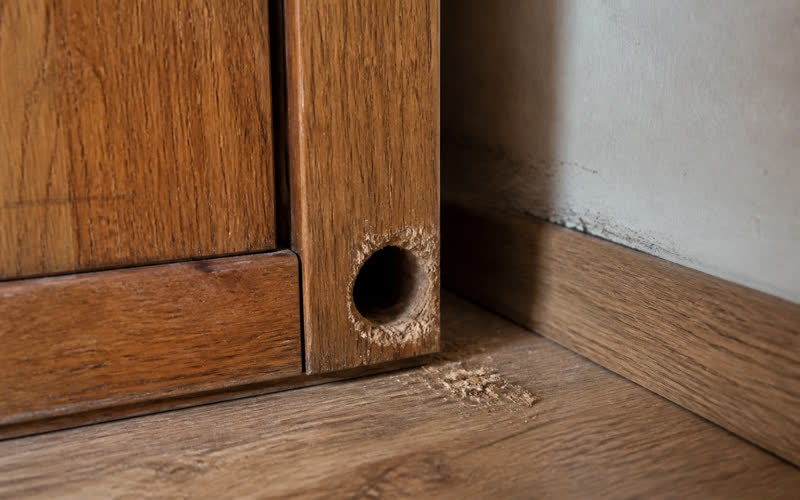
Insulation and structures
Runs through mineral wool and polystyrene reduce its thermal performance. The result is higher heating bills with no other explanation.
Food and stock
Gnawed packaging means written-off goods. In warehouses and shops the losses mount up quickly, and contaminated produce cannot be sold.
Water and services
Rodents also gnaw plastic pipes and ventilation ducts, causing leaks and disrupting ventilation.
How to inspect wiring safely without touching it
Electrics are checked with your eyes, not your hands. Before any inspection, switch off the circuit breaker for the relevant circuit. Look at the visible runs — in cable trunking, behind furniture, in the basement, the loft, near the consumer unit. Signs that point to damage: thin, pale streaks on the insulation where the outer layer has been bitten through; small piles of plastic shavings under a cable; black or brown scorch marks on the wall or the cable; melted insulation; droppings right along the cable route. Never touch, pull or try to wrap a damaged wire in tape. If you can see an exposed conductor or scorching, or you smell burning, switch off the circuit and leave the inspection to an electrician. Do the same if a breaker starts tripping for no clear reason, or if certain sockets lose power.
Recording the damage: photographs, dates, sequence
Documentation is the part almost everyone skips, and later it is exactly what is missing. Photograph before repairs and before cleaning, not after. Each spot needs two shots: one from a distance, so it is clear which room and which part of it this is, and one close up, where the damage is clearly visible. Put something next to the damage for scale — a coin or a tape measure. Make sure the date is switched on in the camera, or at least don't alter the original files. Note when you spotted the damage and when the space was last inspected before that — the interval is often important. Keep the invoices for materials and repair work too. A proper set of photographs and dates is useful in a conversation with a landlord, a building manager or a repair contractor.
Repair cost brackets against the price of prevention
The figures themselves are approximate, but the proportions hold. The lightest bracket is cosmetic: replacing a damaged trim, filling a gnawed patch of plaster, replacing a piece of insulation — a couple of dozen euros and a few hours. The middle bracket is technical: an electrician's callout and replacing a section of cable, repairing a damaged water pipe or waste connection, restoring the wiring of built-in appliances — hundreds of euros already. The heaviest bracket is structural: replacing gnawed insulation over a larger area, opening up a wall to remove a dead animal, restoring flooded parquet or floor covering, putting right the aftermath of a fire. For comparison, treating a flat in Riga costs €40–80, a private house €90–110. Prevention is almost always the cheapest item on the whole list.
Car wiring and the engine bay
A car is somewhere nobody checks until something breaks. Rodents look there for warmth and a protected place to nest, and the engine bay stays warm for several hours after a drive. The signs show up when you open the bonnet: piles of dry grass, leaves, strips of paper or bits of insulation on the engine, in the air filter housing or near the battery; bitten cable ties; droppings on surfaces. The consequences can be illogical warning lights on the dashboard, rough running, a sensor failure. Most at risk are cars that stand unused for long periods in an unheated garage or a yard over winter. Practical steps: don't store pet food or seeds in the garage, check the engine bay regularly, and if you find nesting material, have a garage look at it before you drive.
Unheated buildings, where damage is found months later
Summer houses, garden cabins, empty sheds and properties standing on the market are a category of their own, because there is nobody there to notice the first signs. The damage builds up for months, and it is only seen in spring when the door is opened. The typical picture: a gnawed mattress and soft furniture, gnawed loft insulation, ruined wiring in a cupboard, pipe lagging carried off, and a plastic water pipe bitten through that floods the place as soon as the water is turned on. What to do on arrival: don't switch the electricity and water straight back on, but inspect the consumer unit, the visible cables and the pipe joints first. Only after that turn on the water, and stay with it for the first ten minutes. When you leave the building for a long period, take out all food and any textiles that could serve as nesting material.
What to check before buying or renting an older property
During the viewing, give fifteen minutes to exactly this check. In the basement and foundation area, look for round openings, worn runways along the walls, droppings in corners and behind pipes. In the loft, check the condition of the insulation — tunnelled runs and flattened patches are a clear sign. In the kitchen, look under the sink and behind built-in appliances, where the pipe entries are visible. Outside, walk round the building and assess the ventilation grilles, cracks in the foundation and the gaps under doors. Ask the seller or landlord directly whether rodent control has been carried out at the property, and whether the paperwork for it has been kept. A property that has stood empty for a long time deserves particular attention. If you want an objective assessment before the deal, fill in the form — we reply within 5 minutes.
Frequently asked questions
Does insurance cover rodent damage?
It is often an exclusion — check the policy.
How do I spot cable damage?
By bits of gnawed insulation, droppings near the consumer unit and unexplained electrical faults.
How quickly does damage appear?
Within a few weeks of a nest being established.
How do I tell whether a smell is coming from a dead animal in the wall?
The pattern is a smell that builds over the first few days, peaks after about a week and fades gradually over several weeks. It is stronger in the warmer part of the room and closer to one particular spot on the wall or ceiling. Follow the intensity as you move along the wall; opening up is the last resort and a job for someone who knows what they are doing.
Can damaged insulation be left if the area is small?
Over a small area it is not a structural risk, but there are two reasons to replace it anyway. Compressed, gnawed material loses its insulating value at that spot, and the contaminated zone with droppings and nesting material stays attractive to the next animals. Seal the access routes first, and only then replace the material.
Is it worth checking the wiring once the rodents have been dealt with?
Yes. Damaged insulation stays damaged after the animals are gone, and the risk doesn't go anywhere. Carry out a visual inspection of the visible runs and watch for warning signs — a breaker tripping, flickering lights, sockets getting warm. If any appear, leave the check to an electrician.