
At a glance
- Service
- Rodent control in hotels
- Area covered
- Riga and the surrounding region
- Price
- From €40 — the figure quoted is the final price
- Availability
- 24/7, weekends and nights included
- Reply time
- Within 5 minutes of the form being submitted
- How to book
- Through the enquiry form only
In a hotel, reputation matters as much as the treatment itself. One guest review mentioning a rodent costs more than any service programme.
Discreet work
We arrive with no markings or signage. Stations go in plant rooms, the kitchen and shared service routes, not where guests can see them.
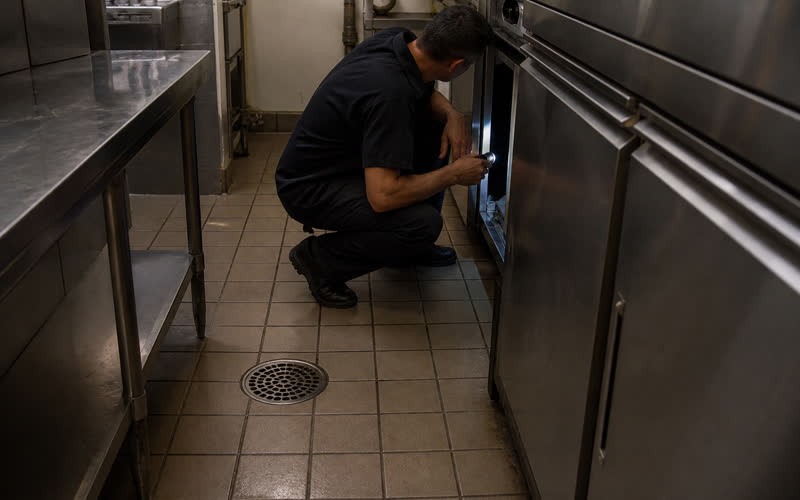
Kitchen and storage
The hotel kitchen and the food store are the main source. Treatment that leaves them out will not give a lasting result.
Night work
We work at night or during low-occupancy periods so that guests' stays are not affected.
Guest rooms and service areas — two different approaches
There is no single treatment regime in a hotel, because the spaces carry completely different risks. In a guest room people sleep, walk barefoot and put a bag on the floor — sealed bait stations are usually not placed there at all. In the room we work with mechanical, enclosed monitoring devices, checks on the service entries and sealing of gaps: the door threshold, where the radiator pipe enters the wall, the bathroom waste connection, the underside of a fitted wardrobe. In the service area — kitchen, stores, laundry rooms, service corridors and the basement — the regime is different: there we lay out a full, numbered network of control points and carry out regular checks. This split means that in the guest areas we get the result through construction work, while we reduce the population at the back of house, where it actually lives. If a treatment plan ignores that distinction, one of the zones is left unprotected.
Linen stores and stocks of bed linen
The linen room is one of the most underrated risk areas in a hotel. It is warm, quiet, rarely entered, and the shelves hold soft material that is ideal for building a nest. A mouse does not chew a sheet from one end — it gnaws a small, round hole and carries the fibres off to the nearest niche behind the washing machine or under the bottom edge of a shelf. Bags of dirty linen with food and drink stains add a food component. In practice we recommend three things: keep clean linen on shelves at least twenty centimetres above the floor and not against the wall, do not let dirty linen accumulate in the laundry room overnight but take it away, and once a month pull the machines out and check behind them. Every gnawed sheet is a sign that the nest is closer than it seems.
Minibar and room-service waste
Room service creates a flow that puts food after dinner where it should not be — in the corridor. Trays with leftovers, put outside the door by the guest and left there until morning, are an open feeding place on an open run. The same goes for minibar leftovers: opened packets of nuts, chocolate on the cabinet shelf, a spilled drink in the bottom of the cabinet that cleaning does not spot. The answer is not complicated but it takes discipline — the night shift must collect the trays at a set time and take them to a closed area rather than leaving them in the service corridor; the minibar cabinets should be taken out once a week and the base washed. If the hotel has late check-ins and trays stand in the corridor until six in the morning, that is a specific, preventable problem keeping a population on that floor.
Corridors, shafts and service lifts as travel routes
A rodent in a hotel does not walk through the lobby — it moves through the vertical services. The service lift shaft, refuse chutes in older buildings, ventilation ducts, heating and water risers and the void above suspended ceilings in corridors form an unbroken network from the basement to the top floor. That is exactly why a problem starting in a basement-level kitchen shows up a few weeks later in a fourth-floor room. During the inspection we follow that network: we check the bottoms of shafts and the access hatches, pipe penetrations through floor slabs, cable entries and the suspended-ceiling void in the corridors. Control points go at the bases of shafts and in service corridors, where a guest never sets foot. Sealing the slab penetrations with hard material matters as much as the treatment itself — it cuts the route upwards.
How staff should report without alarming guests
In a hotel the most important source of information is the housekeeper and the night shift, but only if the reporting procedure is clear and neutral. A simple model works in practice: the observation is written into the internal housekeeping or maintenance log with the room number, the date and a short description — droppings in the bottom of a wardrobe, gnawed packaging, a scratching sound from the wall at night. No discussion in the corridor, no remarks within earshot of guests, no technical vocabulary in public areas. Management collects the entries once a week and looks at whether they cluster in one vertical line or at one end of a floor — that usually points to a shaft or a riser. If a guest asks directly, staff should have one factual, calm sentence about planned maintenance, with no detail and no apology.
Low-occupancy periods as a window for the work
In a hotel the treatment calendar has to be planned around occupancy, not around how acute the problem feels. In Riga the quietest period is usually the second half of January, February and weekdays in November, when a closed floor or a run of rooms does not disrupt operations. That is exactly when it makes sense to do what is impossible in normal running: pull out beds and wardrobes, open up the suspended ceilings in the corridor, seal pipe entries in the rooms, take out and wash the minibar cabinets, and empty and check the stores completely. In the summer season this work is put off, and that is precisely why the problems accumulate. We also work nights and around the clock, so larger sites are split by floor and done in stages. Fill in the form and we will agree a schedule around your occupancy calendar — we reply within 5 minutes.
Frequently asked questions
Will guests notice the treatment?
No, we work discreetly and without markings.
Can you work at night?
Yes, that is the option we recommend for hotels.
Do you provide a regular service?
Yes, a regular service is advisable for hotels.
A guest is complaining about a sound in the wall at night. What should we do first?
Record the room number, the floor, the time and which wall it is — that shows whether the sound is coming from a riser or from the suspended ceiling. Move the guest to a different floor, not the room next door. Then fill in the form; we work nights as well, and the inspection can start the same day.
Will bait stations be placed in the rooms?
Usually not. In guest rooms we work with enclosed mechanical monitoring devices and construction work — sealing thresholds, pipe entries and the undersides of wardrobes. The full network of control points goes into the service areas: the kitchen, stores, laundry rooms, service corridors and the basement.
How long a period should a larger hotel plan for?
The first inspection with a plan usually takes a single visit, but the work by floor is split into several stages according to occupancy. Follow-up visits come every ten to fourteen days. Treatment of commercial premises starts from €70; the exact scope is set after the inspection.