
At a glance
- Topic
- The smell of rats and mice indoors
- Signs
- Droppings, grease marks, gnawing, noise
- Mouse gap
- From 6–7 mm
- Rat gap
- From 20 mm
- What fixes it
- Inspection, bait stations or traps, sealing entry points
- How to book
- Enquiry form only — we reply within 5 minutes
Rodents mark their territory with urine. In an enclosed space — a basement, a pantry or a cupboard — that smell builds up and becomes noticeable even before the other signs do.
How the smells differ
The smell of an active population is sharp, ammonia-like and constant. The smell of a dead rodent is something else entirely — sweet, heavy and growing stronger over a few days. That difference tells you what to do next.
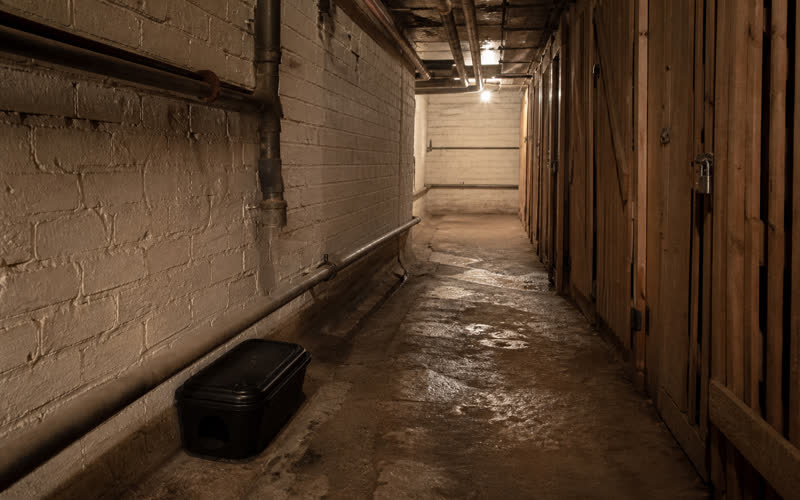
Where the smell concentrates
In places with poor ventilation: the basement, the pantry, behind furniture, inside cupboards and near a ventilation shaft. If the smell is strongest at the ventilation grille, the source may be in a neighbouring flat or in the shaft itself.
Why the smell lingers after treatment
Urine and nesting residue stay in the fabric of the building. After treatment the surfaces need cleaning; nesting material has to be removed and destroyed.
Does the smell attract other rodents
Yes. The scent marks rodents leave tell others this is a safe place — one of the reasons the problem comes back in the same spot.
The three things most often mistaken for it: damp, mould and drains
Before concluding that a room has rodents, it is worth ruling out three similar smells. Damp smells cool, of earth and wet cardboard, gets stronger after rain and is even throughout the room rather than concentrated in one corner. Mould smells sweetish and fungal, is stronger behind furniture and along external walls, and there is almost always a visible dark or grey patch or lifting wallpaper to match. Sewer gas is sharp, sulphurous and eggy, and it comes and goes in waves, most often after water has drained or near a rarely used shower gully whose trap has dried out. The rodent smell is different: ammonia with a milky note, slightly sweet and clinging, and it is characteristically stronger at floor level, at the back of a cupboard or in a shaft rather than in the middle of the room. Check the dry gullies and the damp patches first.
How to track the smell through the rooms to its source
Finding the source is systematic work, not guesswork. Start with the room where the smell is strongest and close all the doors in the property. Air that room out completely, then shut the window and leave it closed for at least two hours. Come back and enter from fresh air — that restores your ability to judge the smell, because the nose adapts quickly in a room. Next check the zones by height: crouch at the skirting, then at the bottom of the cupboard, then at the ventilation grille. A rodent smell is almost always stronger lower down. Then repeat the same in the adjoining rooms and note where the intensity was greatest. If the strongest point is at the ventilation grille but there is nothing on the floor beneath it, the source is most likely in the shaft rather than in that room.
Airing out as both a test and a remedy
Airing out gives you an answer as much as it gives relief. Air the room out completely, close the window and wait two hours. If the smell comes back just as strong, the source is in the room or in its structure — a wall void, under the floor, behind fitted furniture. If it comes back weakly or not at all, it is probably arriving from elsewhere on an air current, and the culprit is a ventilation duct or a poorly sealed shaft door. As a remedy, airing works only with cross-flow: one open window where the air comes in and a way out on the opposite side. In a closed room with a single gap the exchange is slow. In hot weather, air the place out in the morning and late in the evening, when the air is cooler and denser.
When the smell arrives from a neighbour or the shaft
In blocks of flats in Riga this is a common case, and it changes the plan of action. The signs are distinctive: there are no droppings, no gnawing and no night-time noises in the flat, yet the smell is there, and it is strongest right at the kitchen or bathroom ventilation grille. Often it intensifies at a particular time of day, when the neighbours switch on an extractor and the air pressure in the shaft changes. The test is simple: hold a thin strip of paper up to the grille. If it is drawn towards the grille, the duct is pulling the right way; if it is pushed back into the room, there is reverse flow in the shaft and air is entering the flat. In that situation cleaning one room changes nothing — the shaft, the basement and the shared services have to be inspected, and that requires agreement with the building manager.
What actually helps with cleaning and what merely masks
What helps is anything that removes the material from the surface: hot water with detergent, soapy water and then a damp wipe-down. On porous surfaces — concrete, timber, plasterboard — expect one wash not to be enough and repeat it two or three times, letting the surface dry fully in between. Enzyme-based cleaners also work well, because they break organic residue down rather than simply covering it; leave them on the surface for the stated time instead of wiping straight away. Aerosol air fresheners, scented candles and reed diffusers do nothing — they add a second smell on top of the first, and the result is usually worse than what you started with. Perfumed floor cleaners are just as pointless if the source is inside a wall. Always work in gloves and work wet, never dry-sweeping.
If the smell persists after treatment — what may have been missed
A smell that does not fade for weeks after the work usually means one of four things. First, the source may be in a second, uninspected place — often a pipe shaft, under a bath panel or in the void of a fitted unit, where there was no access. Second, the material has soaked into a porous surface, and that calls for repeat washing rather than another treatment. Third, the air is coming in from the shared shaft, and there is nothing wrong in the flat at all. Fourth, an entry route in the building was left open, the animals are still moving through, and the smell keeps being renewed. In practice it helps to note down which rooms and what time of day the smell is noticeable, and whether it returns after airing out. Fill in the form with these observations — we reply within 5 minutes and work around the clock in Riga.
Frequently asked questions
How long does the smell last?
After treatment and cleaning, usually a few days to a couple of weeks.
Is the smell harmful?
The smell itself is not toxic, but it points to a hygiene risk.
How do I tell it apart from a dead animal?
A dead animal smells sweet and heavy, and it grows stronger over a few days.
How do I tell a rodent smell from mould or damp?
Damp smells cool, of earth and wet cardboard, and is even throughout the room. Mould smells sweetish and fungal, and there is almost always a visible patch or lifting wallpaper to match. A rodent smell is ammonia with a milky note, concentrated at floor level, at the back of a cupboard or by the ventilation grille.
There is a smell but no other signs in the flat — what should I do?
Check the ventilation grille: hold a thin strip of paper up to it. If it is pushed back into the room, there is reverse flow in the shaft and the air is coming from elsewhere. In that case the shaft and the basement have to be inspected together with the building manager, because cleaning one flat will change nothing.
Do air fresheners get rid of the smell?
No. Aerosols, candles and diffusers add a second smell on top of the first, and the result is often worse. What helps is hot soapy water, repeated damp washing with full drying in between, and enzyme-based products that break the residue down. Work in gloves and do not sweep dry.