
At a glance
- Page topic
- Rat poison and pets
- Area covered
- Riga and the surrounding region
- Price
- From €40 — the figure quoted is the final price
- Availability
- 24/7, weekends and nights included
- What works
- Metal mesh with a 5 mm aperture and cement mortar; expanding foam does not
- How to book
- Enquiry form only — we reply within 5 minutes
There have been cases in Riga where cats were harmed during rodent baiting. That is a fair reason to ask this question before any treatment.
Two kinds of risk
Direct — the animal reaches the bait. Secondary — the animal eats a poisoned rodent. The second is more common in cats and hunting dogs, because they catch rodents themselves.
How we reduce it
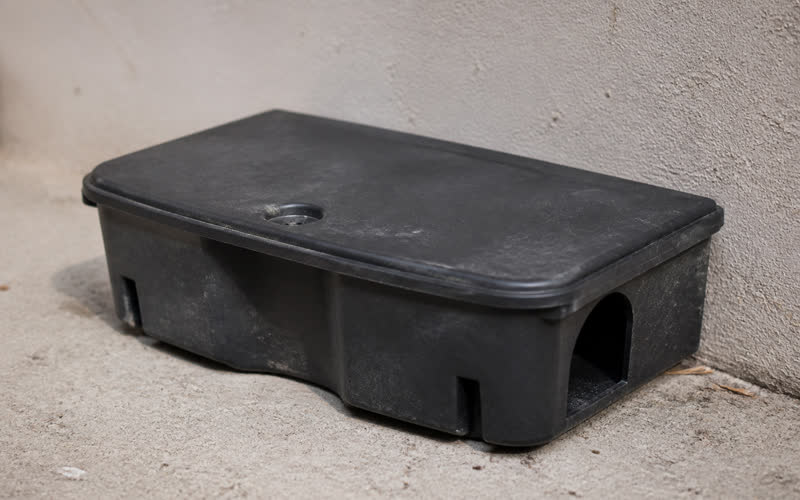
Tamper-resistant, lockable, fixed bait stations with entry holes sized to a rodent. In the places where pets spend most of their time we use mechanical traps rather than bait. Stations go where the dog or cat does not move about.
Signs of poisoning
Tiredness, refusing food, pale gums, blood in the saliva, urine or droppings, bruising on the skin, laboured breathing. Symptoms can appear with a delay of 1–3 days.
What to do if you suspect it
Go to a vet immediately and take information about the product with you if you have it. Anticoagulants have an antidote (vitamin K1), and treatment started in time is usually successful. Do not wait for the symptoms to get worse.
Why cats and hunting breeds in particular are the secondary-risk group
Secondary poisoning means the animal never touched the bait but ate or bit a rodent that had already taken it. This route does not threaten every pet equally. A cat that goes outdoors, and a terrier- or dachshund-type dog, hunt rodents on instinct, even with a full bowl at home. These are exactly the animals that find a weakened rat or mouse fastest, because a poisoned rodent moves slowly in its last days and no longer evades properly. An averagely placid indoor flat cat that never goes out is, in practical terms, not in the secondary-risk group. A dog that runs around the garden or yard every day in Riga's private-house districts is. This difference is worth mentioning during the inspection, because it changes where the bait points go and how many points are planned with poison at all.
Waiting for symptoms is the main mistake
Anticoagulants act with a deliberate delay, and that is precisely what misleads owners. One to three days usually pass between ingestion and the first signs, sometimes more. Throughout that time the animal eats, plays and looks completely normal, because the clotting factors produced earlier are still working in its body. When they run out, internal bleeding starts quickly and without warning. That leads to one practical conclusion: looking normal the next morning is no proof that everything is fine. If you have good reason to suspect that your dog or cat has touched bait or eaten a rodent, go to a vet the same day. A vet can assess clotting values and decide what to do before symptoms appear. Watching and waiting at home to see whether anything changes is exactly the strategy that leads to help arriving too late.
What information actually changes what the vet does
A vet's first questions will be specific, and the more precise your answers, the more targeted the help. Prepare three things. First — what exactly was taken: if a product was placed in the house or the yard, take the packaging with you or photograph the label, because the active substance and its generation determine both the length of treatment and how long the animal needs monitoring. Second — when it happened: an exact or at least approximate time in hours, not a vague "a few days ago". Third — the animal's weight and age, along with any chronic conditions and regular medication. Vitamin K therapy works precisely because it restores the production of the blocked clotting factors, and it is most effective when started early. Doses and course length are set by the vet alone — there is no place here for home remedies or schedules found online.
How the construction of a tamper-resistant bait station physically stops a pet
A professional station is not a plastic box that merely covers the bait. The lid locks and opens with a key or a special tool, not with a paw or a nose. The entry hole is sized for a rodent's body — a mouse and a rat get through, a cat's head and a dog's muzzle do not. Inside, the bait is skewered on a metal rod, so it cannot be pulled out, tipped out or carried off. The station itself is fixed to the ground or a wall so it cannot be knocked over, dragged away or shaken. Every point is recorded, so that at the follow-up check it is clear what sits where. This construction removes almost all of the direct poisoning risk. What it does not remove is the secondary route — and that is exactly why that is handled separately, by placing points further from the zones where the animal hunts.
Outdoor stations in a garden where a dog runs
In the garden of a private house the risk is not the bait itself but an unfixed station. A dog that digs and carries things in its mouth will not be poisoned through a locked lid, but it can drag a loosely placed box into the bushes within an hour and wreck it there. That is why outdoor points are anchored — fastened to the foundations, fence posts, a concrete slab, or driven onto a stake. The layout runs along the fence, along the house foundations, by the compost and the shed, that is, along the rodents' natural routes, which usually coincide with the places a dog runs across less often than the middle of the lawn. If the garden has a children's play area or a favourite spot of the dog's, say so during the inspection and those points will be moved or replaced with traps. After treatment it is worth checking for at least a week that no station has been shifted.
Doing nothing is not the safe option
When an owner is worried about poison, the conclusion is sometimes to put off treatment altogether. That decision is usually worse than acting in a controlled way. An uncontrolled rodent population in the house or garden is itself a health risk to the animal: rats and mice carry leptospirosis, which reaches an animal's body through water or food contaminated with urine, as well as other infections and parasites, and a dog drinking from a puddle in a yard where rats nest is exposed to exactly that. Rodents also damage cables, insulation and ventilation, and a population does not shrink without intervention. The right question is not whether to treat, but how to treat so that the risk to the pet is minimal. Describe in the form what animals live in the house, how much they weigh and where they move — the plan is built around that information.
What to do with a dead rodent found in the yard
A dead rodent in the garden or basement should not be left lying there. First take your pet away and shut it in a room or tie it up — that takes a minute and removes most of the risk. Then put on disposable gloves, place the body in two bags one inside the other and put it in the household waste bin, not the compost, where it will be found again. Wash your hands even after using gloves. If you are not sure whether the dog or cat had already got to it before you noticed, assume it had and contact a vet the same day. A dead rodent found where no treatment has taken place means one more thing: someone nearby or next door has put out bait. That is reason enough to check your own grounds and work out how often your animal spends time there.
Frequently asked questions
Can a dog be poisoned through a rat?
Yes, that is secondary poisoning.
Are the stations safe for a cat?
The entry holes are rodent-sized and the lid locks.
What should I do if my pet has eaten bait?
Go to a vet immediately — an antidote is available.
Can a cat be poisoned by eating a mouse that has eaten poison?
Yes, this route is called secondary poisoning and it is real. A single occasion is less often enough, but anticoagulants accumulate, so repeated rodent hunting in a treated area is a more serious risk than one incident. If your cat goes out and hunts, say so before treatment — the layout of the points and the proportion of bait are planned differently.
How long should a dog be watched after possible contact with bait?
Watching is not treatment. Signs of anticoagulants appear after one to three days, and until then the dog looks healthy, so waiting only loses time. The right course is to go to a vet the same day the suspicion arises. The vet decides whether a clotting test is needed and how long the animal should be followed up.
Can a dog or cat open a bait station?
A properly installed station locks with a key or a tool, has an entry sized for a rodent, bait skewered on an internal metal rod and is fixed to its base. Neither a cat's head nor a dog's muzzle fits through the entry, and the bait cannot be pulled out of the station. If you notice a station that has been moved or damaged, fill in the form and the point will be checked.
Can a house be treated without poison at all if there are pets?
On many sites, yes — mechanical traps under a protective housing, sealing entry points and changes to hygiene resolve a large share of situations, especially flats with mice. With a large rat population around a building's perimeter, going entirely without bait usually gives a slower and incomplete result. Describe in the form what animals live in the house and you will get a reply within 5 minutes with a realistic assessment.