
At a glance
- Topic
- Rats and mice in the ventilation shaft
- Signs
- Droppings, grease marks, gnawing, noise
- Mouse gap
- From 6–7 mm
- Rat gap
- From 20 mm
- What fixes it
- Inspection, bait stations or traps, sealing entry points
- How to book
- Enquiry form only — we reply within 5 minutes
If the noise comes from the wall by the bathroom or the kitchen, it is usually the ventilation shaft — it runs vertically through every floor.
Why the shaft is an ideal route
The shaft is warm, dry, dark and never inspected. It connects every flat vertically, so rodents can get from the basement to any floor without crossing the stairwell.
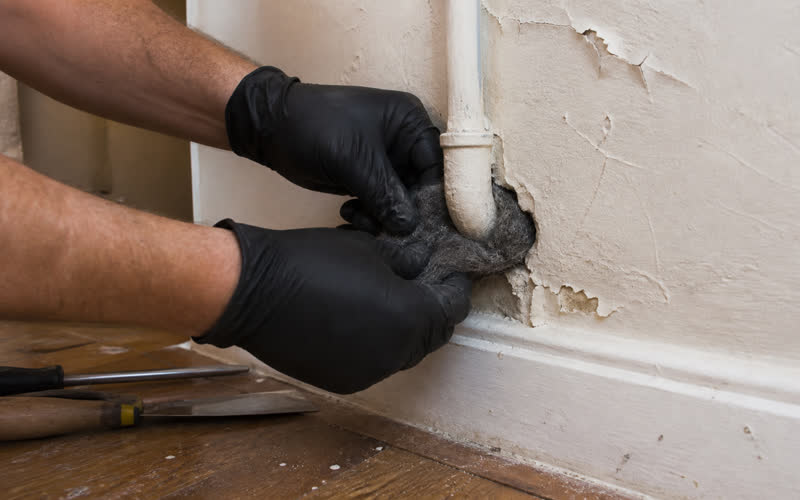
How rodents get into the flat
Through the ventilation grille, if it is damaged or has a large aperture, and through gaps around the shaft trim. Mice pass through a 6–7 mm gap, so an ordinary plastic grille is no obstacle.
What you can do yourself
Replace the plastic grille with metal mesh of up to 5 mm aperture. It does not affect ventilation but physically stops rodents. Do not seal the shaft over — that creates damp and mould.
When the whole building has to be treated
If activity in the shaft is audible in several flats, the source is in the basement or the loft. Treating a single flat will not give a lasting result in that case.
A metal mesh insert that does not reduce airflow
The main mistake in protecting a ventilation opening is using a very fine mesh or a plastic grille with a dense pattern. A rodent chews through plastic in minutes, while fine mesh clogs with dust and grease deposits and the kitchen stops drawing. The practical solution is stainless or galvanised steel mesh with an aperture of up to five millimetres and a wire thickness of at least zero point eight millimetres. That aperture is too small for a mouse or a rat, but the free cross-section stays large and the airflow barely changes. Cut the mesh two or three centimetres larger than the opening, fold the edges and fix it inside the duct with plugs or screws rather than gluing it. The decorative grille goes back on top and can be removed for cleaning. It is worth taking the mesh out and cleaning it once a year so deposits do not build up.
Natural and mechanical ventilation in Soviet-era apartment blocks
In Soviet-era apartment blocks the ventilation is usually natural: air leaves the flat through the kitchen and bathroom grilles into a vertical masonry duct running to the roof, and the flow is driven by differences in temperature and pressure. There is no fan in the duct to bother an animal, so it is a clear vertical route through the whole building. Newer buildings, and renovated ones, often have mechanical extract with a roof fan, and rodents are less common there — but with the fan switched off the duct is just as accessible. The practical sequence is this: in the flat, close the opening with metal mesh; on the roof, check that the shaft head has an intact guard mesh or cap; in the basement, check the bottom end of the duct, which is often open or knocked through. Close only one end and the animals stay in the duct.
Why the kitchen and bathroom shafts are usually separate
In most Soviet-era blocks the kitchen and the bathroom have two independent vertical ducts, sometimes with a separate branch on each floor joining a common shaft higher up. That explains a situation people find strange: the noise is only in the kitchen, while for months there is nothing in the bathroom. If the two ducts are separate, the treatment and sealing plan is separate too — there is no point meshing the bathroom if the movement is in the kitchen duct, and vice versa. The check is simple: hold a thin strip of paper against one grille and see whether it is drawn in. If the smell or the sound appears in both rooms at once, the ducts probably join higher up, or the damage is in the shared shaft masonry. Then the whole vertical run has to be checked, not one flat.
How to work out which floor the movement is on
Sound travels well in a vertical shaft, so the noise heard in a flat rarely matches where the animal actually is. The practical method is comparative. Arrange it with the neighbours above and below you, and on one evening, roughly from ten until midnight, each of you notes the time you hear scratching and how loud it is. The place where the sound is loudest and sharpest, with claws audibly clicking against the masonry, is usually the nearest. Floors further away hear it as a hollow rumble with no detail. The second indicator is a stronger smell and dust or grit falling out of the grille — that only happens close by. The third: inspect the basement and the roof exit; if there are droppings at the foot of the shaft, the colony lives at the bottom and travels up to look for food.
Smells coming from another flat
The shaft carries air as well as sound, so a smell in your kitchen may originate several floors away. A sweetish, heavy smell of decay that gets stronger in the warmest part of the day and comes straight from the grille usually means a dead animal in the duct or in the structure of a neighbouring flat. That smell typically builds for three to five days and fades over two to three weeks, longer if the space is cool. A sharp ammonia note that is steady and does not fade points to a place in the duct where live rodents are living. Taping film over the grille is not a solution — it changes the pressure and pushes the air along another route. It is better to fit metal mesh, improve the air supply into the room, and get the building manager to check the vertical run.
What the building manager can inspect, and where to start
Ventilation shafts are shared structure, so an individual resident cannot get into them legally or safely. The building manager can call in a chimney sweep or a specialist to survey the duct with a camera on a flexible probe, check the draw on each floor, look at the shaft head on the roof and at the bottom end of the duct in the basement. The result of that survey shows whether there is nesting material in the duct, knocked-out bricks, or an old branch that was bricked up but never sealed. Write a specific request: date and time, room, floor, what noise or smell, how long it has gone on; attach a photograph of the grille and state that the issue concerns the whole vertical run, not one flat. If residents from several floors sign it, the survey usually happens sooner.
Frequently asked questions
Is it all right to seal the ventilation shaft over?
No. It causes damp and mould. Use metal mesh.
How do you tell the noise is coming from the shaft?
It is usually heard at the bathroom or kitchen wall and moves vertically.
What should the neighbours do?
If the activity is in the shaft, coordinated treatment across the whole building is the most effective.
Does a cooker hood over the hob protect against rodents?
Not on its own. The extract duct is often plastic or aluminium foil tubing that a rodent chews through, and when it is switched off it is a clear route. Protection comes from metal mesh in the duct opening ahead of the hood connection. A backdraught flap helps against airflow and smells, but it is not a mechanical barrier to an animal.
Can the duct be filled with expanding foam?
No. A rodent chews through foam without effort, and at the same time the draw is blocked, which causes damp and condensation in the flat. If a gap around the duct does have to be filled, put metal mesh or stainless steel wool in first and only then fix it with mortar, leaving the duct itself clear.
How long does the noise last after a treatment in the shaft?
It usually eases within five to ten days, because the bait acts with a delay. If the sound is still there on the same floor after two weeks, the colony is larger or there is another open entry point. In that case fill in the form — we re-inspect the vertical run and the basement connection.