
At a glance
- Location
- Ķegums
- Service
- Rodent control — rat and mouse extermination
- Price
- From €40 — the figure quoted is the final price
- Availability
- 24/7, weekends and nights included
- Getting there
- We travel from Riga; arrival time agreed per address
- How to book
- Enquiry form only — we reply within 5 minutes
Rodent control in Ķegums — a town shaped by power generation
Ķegums is a small town in Ogre municipality that grew up around the Ķegums hydroelectric station, and that determines how it is built: apartment buildings, detached houses and, next to them, technical and industrial premises. Rodent control here starts with an inspection — we walk the perimeter, the basement, the heating substation, ventilation shafts, plant rooms and service ducts, and record entry openings, droppings and greasy rub marks. Only then do we plan bait stations and control points. Of these towns in Ogre municipality, Ķegums is the furthest from Riga, roughly 50 km, and it is 10.4 km to Ogre, so we agree the arrival time separately for each address. Emergency callouts are available around the clock, and we reply to a completed form within 5 minutes. Fill in the form with the address and a short description of the situation.
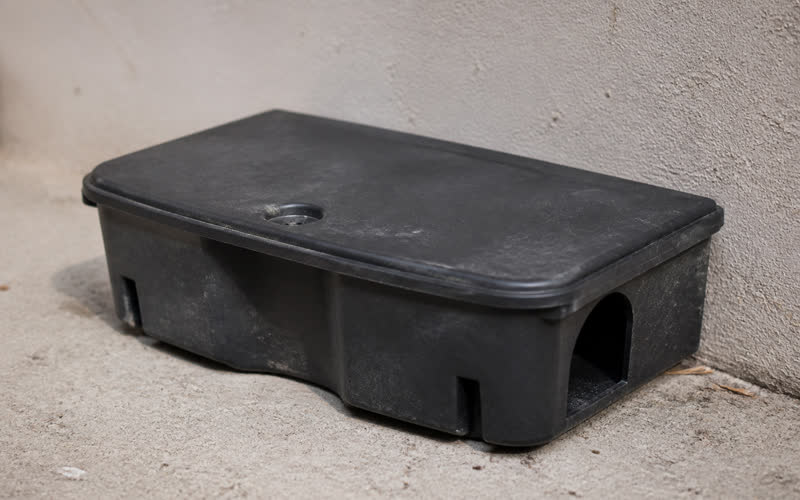
Technical buildings, cable ducts and service tunnels as routes
The proximity of energy and industrial sites means Ķegums has plenty of technical buildings with cable ducts, service tunnels and pipe runs. For rodents these are ideal routes: warm, dry, undisturbed and connected to one another, so an animal can move between buildings without ever surfacing. That changes the logic of the work — bait stations have to be placed not only in rooms but also along the duct and tunnel runs, with control points numbered and marked on the site plan so the result of each check can be written down. That is how a written record of the work carried out is built up. Duct access covers, pipe entries and the lids of technical openings have to be checked individually, because that is most often where the invisible entry point is. Servicing commercial and technical premises starts from €70.
Cable and insulation damage: why delay costs more here
A rodent's incisors grow continuously, so the animals gnaw hard materials, including cable insulation, thermal insulation and the sheathing of plastic pipes. In a technical building in Ķegums the consequences differ from those in a flat: damaged insulation means a risk of a short circuit and equipment failure, and the damage usually comes to light only once something has already shut down. The damaged spot inside a cable duct is often hard to reach, and finding it after the fact costs more than maintaining ongoing rodent control. In practice this means bait stations in plant rooms should not be installed after a problem appears but kept permanently, with regular checks. Shavings, remnants of gnawed insulation under cabinets and greasy rub marks 5–10 cm above the floor are early signs that should be recorded immediately.
The reservoir and wet lowlands: the brown rat's environment
The nearness of the Daugava and the hydro station reservoir, the wet lowlands and the ditch systems around Ķegums create an environment in which the brown rat does well. It seeks moisture rather than avoiding it: bank slopes and ditch edges provide water, cover and soft ground for burrows, and from there the animals move towards heated buildings. Changes in water level flood the burrows and push rats towards the built-up area — and that is exactly when the first tracks appear in basements and plant rooms. A burrow entrance 5–8 cm across by the foundations or on a ditch bank means the animals have already settled in. In damp basements with condensation a population holds on all year round, so rat extermination here always has to be combined with protecting the perimeter on the water side, not just with bait indoors.
The small-town effect: one untreated basement keeps a whole street going
Ķegums is a small town with densely arranged buildings, and that creates a characteristic situation: one untreated basement, an abandoned shed or a neglected outbuilding can sustain a population that serves an entire street. Neighbours treat their houses one after another, the result holds for a few weeks, and then the animals come back from the same source. That is why in an inspection we always look wider than the client's own plot and point out where the likely source lies. In apartment buildings the same applies to shared spaces: if rats are in the heating substation or the basement compartments, treating one flat solves nothing. Treating flats costs €40–80, inspecting and treating a private house €90–110, and the minimum callout charge is €40, though the price is affected by floor area and access to the shared spaces.
Sealing entry points in technical and residential buildings
Mouse extermination and rat extermination without sealing the entry points is work that has to be repeated. Expanding foam is no use — rodents gnaw through it in a few nights. What lasts is metal mesh with a 5 mm aperture together with cement mortar: the mesh is set into the opening and the mortar applied over it. The dimension is decisive, because a house mouse squeezes through a 6–7 mm gap while a brown rat needs a 20 mm opening. In Ķegums the most common ways in are cable and pipe entries in technical buildings, gaps around duct access covers, foundation air bricks, service holes in the heating substation and old basement window openings. The species has to be identified precisely: mouse droppings are 3–6 mm long, rat droppings 15–20 mm. Rats are characteristically neophobic, so they will only approach a new bait station after 3–7 days.
Frequently asked questions
Why should rodent control in plant rooms be kept up permanently?
In technical buildings in Ķegums, cable insulation damaged by rodents creates a risk of a short circuit and equipment failure, and the damage only comes to light once something has failed. Cable ducts and service tunnels are warm, undisturbed routes along which animals move between buildings. Numbered bait stations with regular checks and a written record of the work carried out therefore cost less than searching for the damage after the fact.
The neighbours treated their house, but the rats came back — why?
In a small town the source is often outside the particular plot: an untreated basement, an abandoned shed or a ditch bank by the reservoir. If the source remains, the population recovers within a few weeks. During the inspection we look wider than a single building, set up a perimeter line of bait stations and seal the entry points with metal mesh and cement mortar, since rodents gnaw through expanding foam in a few nights.
How long should you wait for a result after bait stations are installed?
With mice the result shows quickly, because they are not afraid of new things. Rats are characteristically neophobic: they avoid touching a new object in a room for 3–7 days, so first checks with no take-up are normal rather than a mistake in placement. That is precisely why the work is planned as several checks rather than a single trip, and we record the state of the control points at every visit.
Do you travel to Ķegums, given that it is further from Riga?
Yes. Ķegums is roughly 50 km from Riga, so we agree the arrival time separately for each address, taking into account the type of property and how urgent the situation is. Emergency callouts are available around the clock. Fill in the form with the address and a short description of the situation, and we will reply within 5 minutes, also indicating the likely scope of the work.