
At a glance
- Location
- Čiekurkalns
- Service
- Rodent control — rat and mouse extermination
- Price
- From €40 — the figure quoted is the final price
- Availability
- 24/7, weekends and nights included
- Getting there
- We travel from Riga; arrival time agreed per address
- How to book
- Enquiry form only — we reply within 5 minutes
Rodent control in Čiekurkalns: low-rise housing in a loop of railway lines
Čiekurkalns is a historic working-class neighbourhood hemmed in on several sides by railway lines and main roads. Inside it there are timber and masonry low-rise houses, narrow lanes, yards with sheds and gardens, and among them a scattering of apartment blocks and warehouse premises. This type of building stock means that rodent control in Čiekurkalns is mainly outdoor work. The classic approach of a bait station in the basement does not work here, because many houses have practically no basement — there is a store room, a crawl space, or simply a ventilated void under the floor. During the inspection we walk the perimeter: the plinth line, crawl-space vents, sheds, the log pile, the compost heap, the base of the fence. The weight of rodent control here lies in perimeter protection and the outbuildings, not inside the house. So we build the treatment plan around the building rather than in the middle of it, and add internal points only once the signs confirm the need.
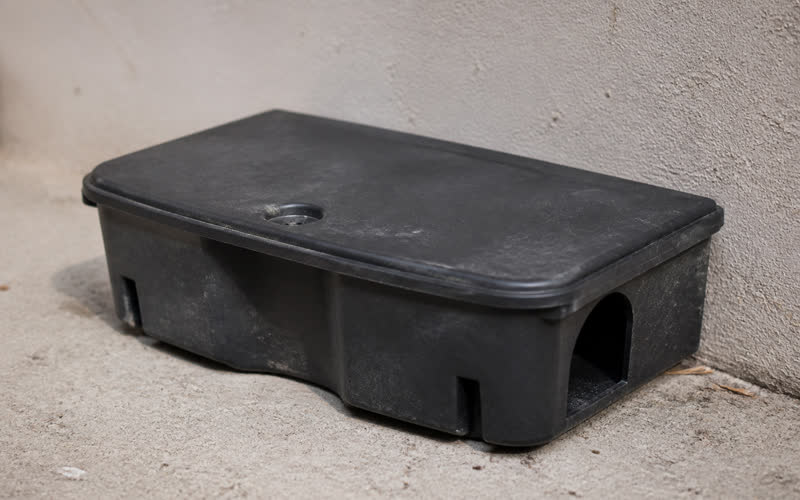
Embankments and verges: shelter a few dozen metres away
Railway embankments with their ballast, ditches and overgrown verges run along the edges of the neighbourhood and come right up to the yards. A layer of ballast and the slope of an embankment make a good place for burrows — the ground is drained, the cover is thick, and human movement is irregular. You recognise a brown rat's burrow entrance by an opening 5–8 cm across in the slope or along the base of a fence, with a fan of excavated soil at its mouth. Since the distance from the verge to the nearest log pile or shed is often less than a hundred metres, the pressure in the low-rise part of the neighbourhood is constant rather than seasonal. In practice this means we set the external control points in a line facing the embankment side, and place them on the actual runs along hard edges — a wall, a fence, a kerb — not in the middle of the yard, where a rat does not walk.
Timber construction: why foam is even more pointless here
In timber houses the way in is usually not one large gap but several small ones: joints in the board cladding, a rotted section of the bottom log, crawl-space vents with no mesh, a plinth trim board that has come loose. In timber, moreover, a rodent can enlarge an opening that already exists — a mouse needs 6–7 mm to start with and a rat 20 mm, but in a soft material those dimensions grow. In this kind of construction expanding foam is a purely cosmetic answer; it gets chewed through, and often an even more convenient run forms behind it. What works is metal mesh with a 5 mm aperture, mechanically fixed to the timber and, where there is a masonry plinth, bedded in cement mortar. Sealing entry points in a timber house is careful, measured work along the whole bottom line, not the plugging of a couple of spots. Crawl-space vents must not be bricked up completely — we cover them with mesh, keeping the airflow.
Sheds, crawl spaces and gardens: where we actually find the nests
In a low-rise yard the commonest findings are in the outbuildings, not in the living space. A shed full of stored belongings, a log pile standing on the ground, a garden-tool store, a greenhouse, a compost heap and a bird feeder — each of them offers either shelter or food. In the crawl space under the floorboards a rodent finds somewhere dry, warm and completely dark; droppings and gnawed insulation are often visible there. That is why an inspection in Čiekurkalns always covers every building in the yard, not just the house. Often a few changes are enough — firewood on a pallet and away from the wall, compost in a closed bin, the feeder raised — for the result of the treatment to hold. Inspecting and treating a private house costs €90–110, and the minimum callout is €40. That price also includes looking over the outbuildings, because without it the result does not last.
Apartment blocks and commercial premises between the low-rise lanes
Alongside the timber housing the neighbourhood has Soviet-era apartment blocks, warehouses and office premises. There the entry points are different: the heating substation, service entries in the basement, the boxing around risers, the ventilation shaft and basement windows with no mesh. On commercial premises the key place is goods-in — the gap under the door, the edge of the dock and the bin area. Rodent extermination on business premises here rests on a line of tamper-resistant bait stations around the perimeter plus internal control points in the service corridors; prices start from €70. Treating a flat costs €40–80. In apartment buildings we agree a single plan for the building and the yard with the building manager, because treating individual flats in different months produces no result. We cover ventilation shaft openings with metal grille of 5 mm aperture, because a mouse needs only a 6–7 mm gap.
How the work goes and how to book it
We start with an inspection. We record the signs: droppings — 3–6 mm for mice, 15–20 mm for rats — grease marks 5–10 cm above the floor along the foot of a wall, gnawing in timber structures and in insulation, runs and burrow entrances along the fence and the plinth. We then set out bait stations and control points around the perimeter and in the outbuildings. We do not judge the result the next day: the brown rat shows neophobia and avoids anything new for 3–7 days. On the second visit we look at bait take, adjust the layout and finish sealing entry points along the plinth and at the crawl-space vents. We prepare a written record of the work carried out, with the point plan and the signs found. We work 24/7 and take emergency callouts, including in low-rise housing. Fill in the form and describe the house and the outbuildings — we reply within 5 minutes and tell you what scope of inspection is needed.
What rodent control in Čiekurkalns covers
Rodent control in Čiekurkalns means a full cycle, not a single treatment. Rat extermination and mouse extermination start with an inspection: we identify the species, find the runs and the entry points, and only then choose the method. Rodent control includes placing tamper-resistant bait stations or mechanical traps on the routes actually in use, a follow-up check, and specific recommendations on what to seal so the problem does not come back. The price depends on the type and size of the property: treatment starts from €40, and the figure quoted is the final price. Describe the property in the form — we reply within 5 minutes.
Frequently asked questions
How much does rodent control in Čiekurkalns cost?
The minimum callout is €40. Treating a flat usually costs €40–80; inspecting and treating a timber or masonry private house together with its outbuildings is €90–110; for commercial premises prices start from €70 depending on floor area and the number of control points. Fill in the form and tell us the type and size of the property.
There is no basement in our old timber house. So where do the bait stations go?
Around the perimeter and in the outbuildings. We place the points along the plinth line, at the crawl-space vents, in the shed, by the log pile and along the base of the fence — wherever runs are visible. Inside the house we use control points only if the signs point to nesting in the crawl space or in a partition wall. That is also safer if there are pets in the house.
Can gaps in timber walls be filled with expanding foam?
No. Both mice and rats chew through foam, and in timber the opening only gets bigger afterwards. Use metal mesh with a 5 mm aperture, mechanically fixed to the timber; in a masonry plinth the mesh is bedded in cement mortar. A mouse gets in through 6–7 mm and a rat through 20 mm — which is why the whole bottom line has to be sealed.
The rats are coming from the railway verge. Can anything be done about that?
The embankment itself cannot be treated, but the approach can be cut off. We set the external control points in a denser line facing the embankment side, sort out the food sources in the yard — compost, bird feeder, log pile — and seal the crawl-space vents. That boundary line usually gives the biggest effect. On top of that we cover the crawl-space vents with metal mesh of 5 mm aperture and check the bottom line of the plinth around the whole perimeter.