
At a glance
- Location
- Pļavnieki
- Service
- Rodent control — rat and mouse extermination
- Price
- From €40 — the figure quoted is the final price
- Availability
- 24/7, weekends and nights included
- Getting there
- We travel from Riga; arrival time agreed per address
- How to book
- Enquiry form only — we reply within 5 minutes
Rodent control in Pļavnieki: density moves the problem into the vertical
Pļavnieki is a densely populated residential district in the eastern part of Riga, and it is precisely the density of housing that shapes how the rodent problem shows itself here. Where one stairwell serves many flats and many kitchens stacked in a single vertical line, the decisive structure is no longer the basement floor but the ventilation shaft. A rodent does not travel sideways from neighbour to neighbour — it moves up and down a single riser, which is why complaints appear at once from several floors in the same line. Residents rarely make the connection: each of them assumes the problem is in their own flat. In practice it is one problem showing up in five places. An inspection in Pļavnieki therefore almost always starts with the question of which flats sit in the same vertical line, not with who got in touch first.
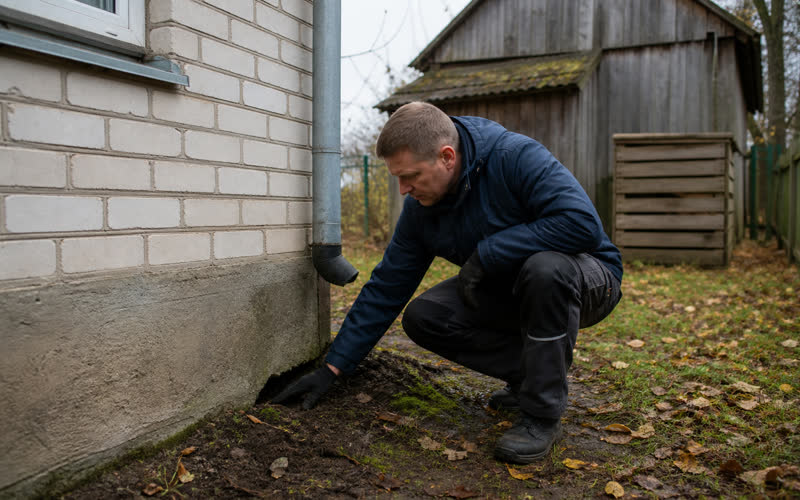
The ventilation shaft: how to read which floor the noise is really on
Sound travels very well in a shaft, and it misleads. Someone on the third floor hears scratching behind the kitchen grille and is certain the animal is in their wall, when in fact it is two floors higher. The practical method is simple: compare the timing. If several flats on the same riser hear the noise at the same hours, you are dealing with one group of animals, and the actual nest is where the noise is loudest and lasts longest, not where it was noticed first. The second marker is physical evidence: droppings on or below the edge of the grille, 3–6 mm long for a house mouse. A house mouse gets through a 6–7 mm gap, so an unsealed grille is effectively an open door to the whole vertical line.
Why treating a single flat fails more often here than elsewhere
This is a Pļavnieki-specific point worth stating plainly. A resident books a treatment in their flat, the animals disappear for a while, and three weeks later they are back — because what was treated was one branch, not the riser. In dense housing with many flats in one vertical line there will always be another food source and another unsealed grille somewhere above or below. That is why, wherever it is technically possible, rodent control in an apartment building should be organised along the whole riser at once, coordinated with the building manager and the neighbours. Where that cannot be arranged, we at least seal your own flat so that it drops out of the route: mesh over the grille, sealed pipe entries and discipline about food storage. Rodent control in a flat: one-room €40, two-room €55, three-room €70, four-room €80.
The sewer stack and the bathroom pod
The second vertical route is the sewer stack. In a Soviet-era apartment block the bathroom and WC are in most cases a single prefabricated pod, and the stack runs through every floor in one shaft. If a flat on some floor has been refurbished and the pipe entry in the wall has been left open or filled with expanding foam, an open crossing from the shaft into the flat is created. Foam stops neither a mouse nor a brown rat — it is chewed through in a few nights. What works is metal mesh with a 5 mm aperture in cement mortar. We find this often in Pļavnieki precisely because there is a great deal of refurbishment in a dense district and it happens at different times. During the inspection we open the inspection hatch, if there is one, and check the base of the stack in the basement — that is where the climb upwards begins.
Basement and heating substation: the bottom end still has to be sorted
The vertical logic does not mean the basement can be skipped. Quite the opposite — a riser starts somewhere, and that somewhere is the basement. The heating substation is the warmest and dampest room in the whole building, so that is where they nest, and from there they spread up the vertical lines. We place control points at the heating substation, at the base of each riser, and along the basement walls where grease marks are visible 5–10 cm above the floor. The brown rat avoids new objects for 3–7 days, so an empty bait station at the first check means nothing yet — what matters is the bait take at the follow-up inspection. In a dense district with many buildings side by side, rodent control works better if the building manager plans several buildings in one cycle rather than reacting to individual complaints.
Booking us, and what you should have ready
So that an inspection in Pļavnieki is not a wasted trip, some specific information in the form is useful: which floor the noises were heard on, at what time of day, whether you know that the neighbours above or below have the same thing, and whether droppings have been found — and how long they are. Mouse droppings are 3–6 mm, brown rat droppings 15–20 mm; that single detail changes the whole plan. It also helps to know whether the bathroom or kitchen has been refurbished in the past year. If the matter concerns common property, tell us whether to deal with you or with the building manager, and whether there is access to the basement. We work 24/7, emergency callouts are available, and we reply to enquiries within 5 minutes. Work on commercial premises from €70, minimum callout €40.
What rodent control in Pļavnieki covers
Rodent control in Pļavnieki means a full cycle, not a single treatment. Rat extermination and mouse extermination start with an inspection: we identify the species, find the runs and the entry points, and only then choose the method. Rodent control includes placing tamper-resistant bait stations or mechanical traps on the routes actually in use, a follow-up check, and specific recommendations on what to seal so the problem does not come back. The price depends on the type and size of the property: treatment starts from €40, and the figure quoted is the final price. Describe the property in the form — we reply within 5 minutes.
Frequently asked questions
My neighbours above and below have rodents too. Is that a coincidence?
No. In dense housing rodents move vertically along a single ventilation shaft, not sideways from flat to flat. If complaints come from several floors on the same riser, it is one problem. Dealing with it one flat at a time is more expensive and less effective than treating the whole vertical line.
I can hear scratching in the wall. How do I tell whether the animal is actually in my flat?
Sound travels several floors in a shaft, so what you hear is misleading. Look for physical evidence: droppings by the ventilation grille, gnawing, grease marks. If there are no traces but there is noise, the nest is most likely on another floor in the same vertical line, and you need to talk to the neighbours and the building manager.
Is it enough to tape over the ventilation grille?
Taping it over is not allowed — a flat needs its ventilation. Instead of the grille you fit metal mesh with a 5 mm aperture, which lets air through but does not let anything past: a house mouse gets through a 6–7 mm gap. On top of that, the pipe entries under the sink and behind the bath need sealing — the crossing there is even easier.
Why did the rodents come back after the flat was treated?
Most often because what was treated was one branch, while the source stayed in the riser or in the basement by the heating substation. In a dense district there will always be another unsealed grille a floor higher. A lasting result requires sealing entry points along the whole vertical line and control points in the basement.