
At a glance
- Location
- Vangaži
- Service
- Rodent control — rat and mouse extermination
- Price
- From €40 — the figure quoted is the final price
- Availability
- 24/7, weekends and nights included
- Getting there
- We travel from Riga; arrival time agreed per address
- How to book
- Enquiry form only — we reply within 5 minutes
Rodent control in Vangaži: a compact town of apartment blocks
Vangaži is a small, dense town in Ropaži municipality where the built form is dominated by Soviet-era apartment blocks — there are comparatively few detached houses and industrial sites. That changes the whole approach: in an apartment block a rodent problem is not the problem of one address but of the building. Rodent control in Vangaži therefore almost always starts not in the flat but in the basement — that is where the warmth, the damp and the services are, and it is from there that the population feeds every floor. The inspection covers the basement perimeter, the heating substation, the service shafts and the plinth level of the stairwells. If that stage is skipped, any treatment on the upper floors is short-lived.
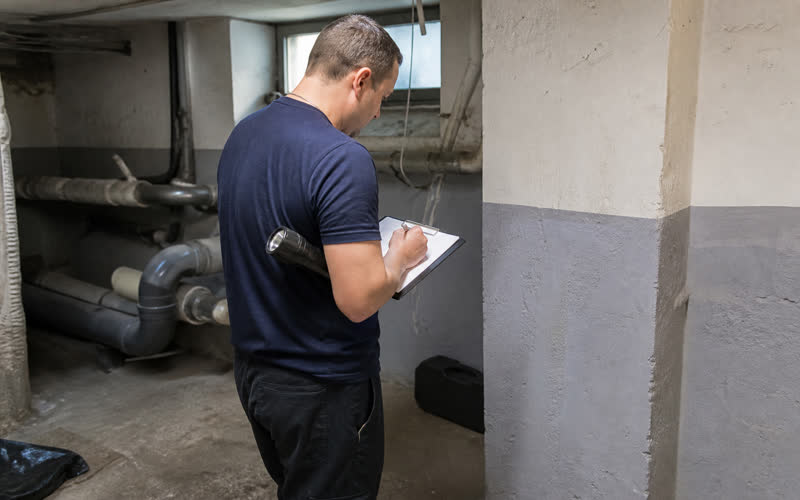
Basement and heating substation: where the population actually lives
In a Soviet-era apartment block the basement and the heating substation are the part of the building that sustains rodents all year. There is a stable temperature, pipe insulation for nesting and often an accumulation of residents' belongings that provides shelter. The brown rat comes in through sewer and service entries, the house mouse through any 6–7 mm gap in the plinth or a basement window. During the inspection we walk along the basement walls looking for greasy rub marks 5–10 cm above the floor: they show the established route far more precisely than isolated finds. Bait stations and control points are placed along exactly that route rather than spread evenly through the space.
Ventilation shafts: the vertical route between floors
In an apartment block the ventilation shaft is the main vertical route by which the house mouse gets from the basement to a kitchen or bathroom on any floor. That is why the typical picture in Vangaži is signs appearing at the same time in several flats on one stack rather than in flats next door to each other. Along with the shafts, the pipe entries under the sink, gaps in partition walls and skirting-board joints have to be checked. Sealing is done with metal mesh with a 5 mm aperture and cement mortar — a rodent chews through expanding foam in a few nights, so it is no use. Treating a flat in Vangaži costs €40–80, and the minimum callout charge is €40.
Why treating one flat usually solves nothing
If only one flat is treated while the basement and the shafts are left untouched, the rodents come back within a few weeks — the source has not been dealt with. The solution that actually holds in Vangaži is to coordinate the work with the building manager: treatment in the basement and the heating substation, control points along the route, sealing of the plinth and the service entries, and only then work in individual flats. For a resident the practical step is to record the signs — house mouse droppings are 3–6 mm long, rat droppings 15–20 mm — and submit them to the building manager along with the request. For work at building level the commercial price starts from €70, depending on floor area and the number of control points.
Industrial sites and the railway line as movement corridors
In Vangaži residential and industrial development is mixed, and a railway line runs through the town. The railway embankment, its verges and the overgrown strips beside it are a typical movement corridor for the brown rat — there is cover, moisture and a continuous linear route along which a population spreads between sites. In production and warehouse premises the entry points are usually the bottoms of doors and the goods-in areas. A rat burrow entrance is a hole 5–8 cm wide in the ground at the edge of the foundations or on the embankment slope. Perimeter protection at such sites is therefore planned from the corridor side — stations between the railway edge or the neighbouring property and the building itself.
Woodland surroundings, commuting and getting in touch
Vangaži is surrounded by wooded areas, so in autumn buildings on the edge of town also get the field mouse, which comes in at ground level and through gaps in the plinth — a seasonal addition to the permanent basement population. Vangaži is also very much a commuter town for Riga: many residents spend the day in Riga, the flat stands empty, and the first signs go unnoticed until the night a noise starts in the shaft. The brown rat is cautious about new things, so for the first 3–7 days it may not go near the stations. Treating a private house is €90–110, a flat €40–80. We work 24/7, including emergency callouts. Fill in the form — we reply within 5 minutes.
What rodent control in Vangaži involves
Rodent control in Vangaži means a full cycle, not a single treatment. Rat extermination and mouse extermination start with an inspection: we identify the species, find the movement routes and entry points, and only then choose the method. Rodent control involves placing tamper-resistant bait stations or mechanical traps on the actual runs, a repeat check, and specific advice on what needs sealing so the problem does not recur. The price depends on the type of property and its floor area: treatment starts at €40, and the figure quoted is the final price. Describe the property in the form — we reply within 5 minutes.
Frequently asked questions
Why do mice appear on the upper floors if the basement is at the bottom?
The house mouse uses ventilation shafts and pipe stacks as a vertical route, and a 6–7 mm gap is enough. That is why signs often appear at the same time in several flats on one stack. The solution is treatment in the basement and the heating substation together with sealing of the entries under the sinks and at the shafts.
Is it enough to treat only my own flat?
Usually not. If the source is in the basement and the shafts, the rodents return within a few weeks. The solution that holds is to coordinate the work with the building manager so that the basement, the heating substation and the service routes are treated, and only then the individual flats. Describe the situation in the form.
What should I do if the building manager has not responded yet?
Record the signs — house mouse droppings are 3–6 mm long, rat droppings 15–20 mm, and rub marks are usually visible 5–10 cm above the floor. This information is the basis for a request to the building manager. In parallel we can carry out an inspection and treatment inside the flat to reduce activity — treating a flat costs €40–80.
Does foam around the pipes under the sink help?
No. Rodents gnaw through expanding foam and the gap opens up again. What works is metal mesh with a 5 mm aperture together with cement mortar. At the same time the ventilation shaft outlet, gaps in partition walls and skirting-board joints have to be checked, because a mouse needs only 6–7 mm and a rat 20 mm.