
At a glance
- Location
- Bolderāja
- Service
- Rodent control — rat and mouse extermination
- Price
- From €40 — the figure quoted is the final price
- Availability
- 24/7, weekends and nights included
- Getting there
- We travel from Riga; arrival time agreed per address
- How to book
- Enquiry form only — we reply within 5 minutes
Rodent control in Bolderāja: the port starts just behind the housing
Bolderāja is a large neighbourhood in the north-west of Riga at the mouth of the Daugava, where port and industrial land, warehouses, apartment blocks and detached houses sit literally side by side. It is this dense collision of functions that dictates how rodent control in Bolderāja has to be planned. Cargo handling yards, open storage and transhipment areas give the brown rat a steady food base all year round, and at night the animal moves towards the warm buildings — basements, heating substations and bin areas. That is why we never start with bait in a kitchen. The inspection comes first, and it runs from the port side towards the building, not the other way round. We look for runs along fences, burrow entrances in embankments, and droppings in service rooms. As long as the food source at the edge of the port stays open, any rodent extermination in a stairwell only trims the population back; it does not solve anything. We build the plan from the outer boundary inwards: perimeter, service rooms, flats.
Goods-in and warehouses: where the food enters the neighbourhood
On port and logistics sites, rodent control almost always starts at goods-in. Open loading aisles, raised dock doors, broken pallets, spilled grain or feed material, and skips standing on soft ground — that is the standard list of findings. A rat uses the gap under the door; 20 mm is enough, and after a couple of seasons the rubber seal on a dock usually no longer sits tight. Rodent extermination on commercial sites in Bolderāja therefore means two jobs running in parallel: control points along the inside of the perimeter and the service corridor line, plus corrections to storage discipline — pallets off the wall, waste in closed containers, spillages cleared at the end of the day. Work on commercial premises starts from €70, and the price is set by floor area and the number of control points needed, not by the name over the door. Every point is numbered and marked on a plan.
Isolation as an advantage: this problem can be closed off
Bolderāja is separated from the rest of the city by Daugavgrīvas iela, water, and large stretches of undeveloped land. In daily life that means distance; in rodent control it is good news, because the population here is comparatively self-contained and therefore manageable. Once the perimeter on the port side has been sorted out, the influx from outside is not endless — unlike a tightly built chain of city-centre blocks, where the neighbouring building keeps supplying fresh animals. In practice this means perimeter protection in Bolderāja pays off sooner: external control points along the site boundary, sealed service entries and a tidied bin area really do stop the population rebuilding. With a building manager we normally agree one shared plan for the whole building and yard, rather than separate flat treatments spread across different months. That is also the only way to compare bait take between visits and see whether the population is genuinely shrinking.
Wet ground and low relief: where a rat digs its burrows
Being close to the Buļļupe, the Daugava and the low coastal ground means a high water table and seasonal swings in it. The brown rat digs its burrows in soft, drained soil — in the sides of embankments, along fence lines, under sheds and next to compost heaps. The burrow entrance is 5–8 cm across, round, with a fan of excavated sand at the mouth. When autumn water or heavy rain lifts the level, the lower runs flood and the animals are pushed upwards: into basements, ground floors and outbuildings. That is why the wave of enquiries in Bolderāja usually follows a change in the weather rather than a shortage of food. We place external points on the actual runs along hard edges, not in the middle of the yard, and after a wet spell we review the layout, because the burrow system may have shifted a few metres. Standing the bins on a hard surface helps too.
Different buildings, different ways in: from apartment block to detached house
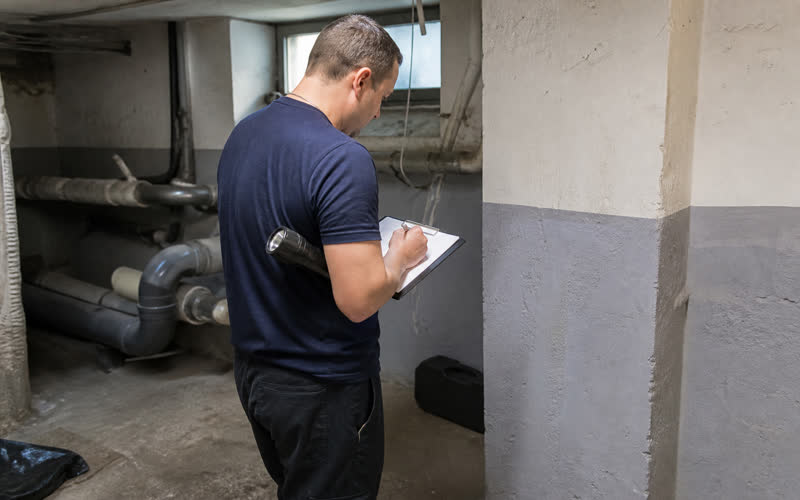
One neighbourhood here holds Soviet-era apartment blocks, older low-rise housing and private houses. The routes in differ. In an apartment block it is usually the heating substation, the boxing around risers, a ventilation shaft and basement windows with no mesh; a house mouse uses a 6–7 mm gap, which to the human eye looks like nothing more than a crack. In a private house it is joints in the plinth, the gap under the garage door, the base of a terrace and pipe entries. What they have in common is one thing: expanding foam does not stop a rodent, it is chewed through in a few nights. What works is metal mesh with a 5 mm aperture, bedded in cement mortar. Sealing entry points is the part of the job that decides whether we are back in three months. Treating a flat costs €40–80, a private house €90–110. During the inspection we walk the whole plinth, not just the wall where the signs were noticed.
How we work and what you get afterwards
We start with an inspection, recording the signs and the entry points: droppings, grease marks, gnawing, runs and burrows. Mouse droppings are 3–6 mm, rat droppings 15–20 mm; grease marks along the foot of a wall are usually found 5–10 cm above the floor. We then plan the bait stations and control points, bearing in mind that the brown rat shows marked neophobia — it avoids anything new for 3–7 days, so a check the very next day tells you nothing. On the second visit we assess bait take, adjust the layout and finish sealing the entry points. We prepare a written record of the work carried out, with the point plan, our findings and recommendations on waste and storage discipline in the yard. We work 24/7 and take emergency callouts. Fill in the form, describe the property and the signs you have seen — we reply within 5 minutes and tell you what scope of inspection is needed.
What rodent control in Bolderāja covers
Rodent control in Bolderāja means a full cycle, not a single treatment. Rat extermination and mouse extermination start with an inspection: we identify the species, find the runs and the entry points, and only then choose the method. Rodent control includes placing tamper-resistant bait stations or mechanical traps on the routes actually in use, a follow-up check, and specific recommendations on what to seal so the problem does not come back. The price depends on the type and size of the property: treatment starts from €40, and the figure quoted is the final price. Describe the property in the form — we reply within 5 minutes.
Frequently asked questions
How much does rodent control in Bolderāja cost?
The minimum callout is €40. Treating a flat usually costs €40–80, inspecting and treating a private house €90–110, and for commercial premises — warehouses, production sites and port infrastructure — prices start from €70 depending on floor area and the number of control points. Fill in the form and tell us the type and size of the property.
Is there any point treating a flat if the rats are coming from the port?
There is, but only together with work on the perimeter. If you treat only the flat, the animals come back by the same route. In Bolderāja the advantage is the relative isolation of the neighbourhood: once the port-side perimeter, the bin area and the service entries have been sorted out, the flow of new animals stops. In practice that means one treatment in the flat and one job on the perimeter, rather than repeat treatments every season.
How do I tell whether it is a mouse or a rat in the basement?
We go by size. Mouse droppings are 3–6 mm, rat droppings 15–20 mm. A rat is also indicated by grease marks 5–10 cm above the floor along the wall and by a burrow entrance 5–8 cm across outside. A mouse gets through a 6–7 mm gap; a rat needs about 20 mm. We confirm this during the inspection and choose both the layout of the points and the size of the bait stations accordingly.
Is expanding foam any use for sealing basement windows and pipes?
No. Both mice and rats chew through expanding foam — it is a soft barrier that only looks like a fix. What works is metal mesh with a 5 mm aperture set in cement mortar, along with metal collars around pipe entries. We do this as part of sealing entry points after the inspection, once we know which openings are actually being used.